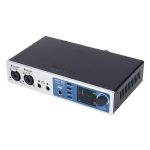
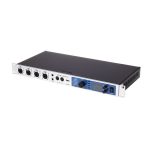
RME Fireface UFX II


Core features of the RME audio interface
- AD/DA conversion: 24 bit / 192 kHz
- 30 Input and 30 output channels
- Digital gain control for all inputs – mic, line, instrument
- MIC In: Max. +18 dBu, 75 dB gain range
- DURec function – direct recording to a USB medium
- Steady Clock FS for maximum jitter suppression
- DSP with EQ, dynamics and reverb
- TotalMix FX software – 1800-channel mixer with 46-bit internal resolution
- DIGICheck software – metering and analysis tool
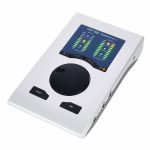
- TFT display and volume control
- Stand-alone operation
- DC-coupled outputs
- iPad compatible (class compliant mode)
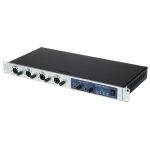
- Format: 19″ 1 U
- Includes USB cable
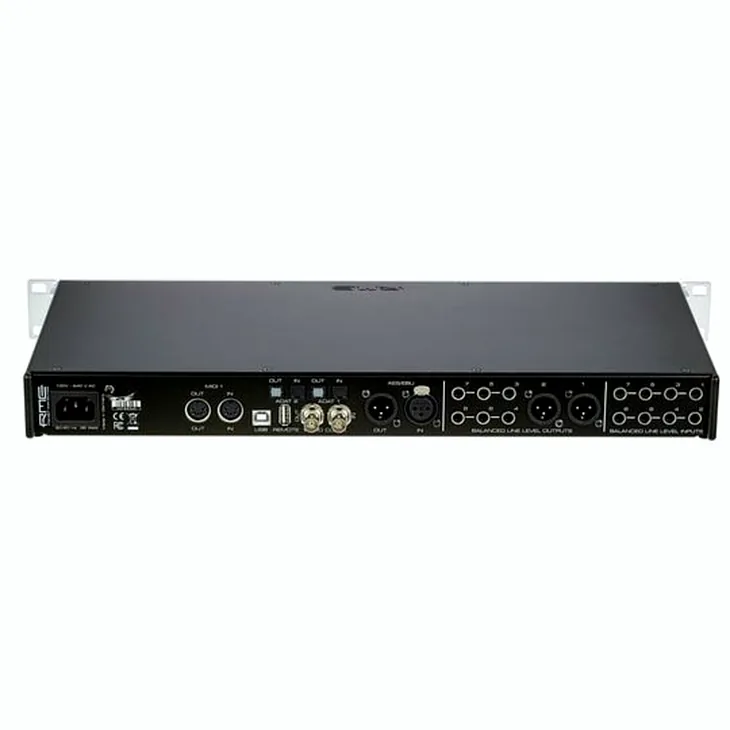
- 4 Mic/line combo inputs: XLR / 6.3 mm jack
- 8 Line inputs: 6.3 mm jack
- 2 Line outputs: XLR balanced
- 8 Line outputs: 6.3 mm jack balanced
- AES/EBU input and output: XLR
- Word clock input and output: BNC
- 2 ADAT inputs and outputs – or 1x ADAT and 1x S/PDIF optical input and output
- 2 MIDI inputs and outputs
- Remote input for optional RME ARC USB (Art.402467 – not included)
- 2 Stereo headphone outputs: 6.3 mm jack
- USB 2.0 port
Images




Additional Information
Customer Review Summary
RME Fireface UFX II Review
Having extensively tested the RME Fireface UFX II alongside other interfaces, I can confidently say it stands out in both sound quality and build. The preamps and converters deliver exceptional clarity and depth, making it ideal for a variety of genres, especially where detailed sound reproduction is essential. The difference in audio quality compared to my previous Focusrite and MOTU interfaces is remarkable—transparent and precise, with low latency that allows for seamless monitoring.
The TotalMix FX software is incredibly versatile, offering near-infinite routing options that make it easy to manage complex setups without additional hardware. Although the learning curve can be steep initially, once familiarised, it becomes intuitive and user-friendly. The ability to control all inputs and outputs flexibly has eliminated the need for external patchbays in my studio.
In terms of build quality, the RME UFX II is robust, constructed entirely of metal, which instills confidence in its durability. All knobs and connectors are solid, with no play, and the professional aesthetic is a clear indication of its quality. The compact display provides instant feedback on levels, and the device operates flawlessly with minimal setup required, even on various operating systems.
Moreover, the RME drivers are exceptionally stable, continuously updated, and compatible with both Windows and macOS, ensuring long-term usability. This dedication to support and improvement is a significant advantage over competitors, which often leave older hardware behind after initial release.
While the price may be a consideration, the performance, reliability, and quality of the RME Fireface UFX II make it a worthwhile investment for anyone serious about audio production. It has become the backbone of my home studio, and I have no doubt it will serve my needs for many years to come.
In summary, if you’re in the market for a professional audio interface that excels in sound quality, routing flexibility, and build quality, the RME Fireface UFX II is undoubtedly a top contender.
Read more…