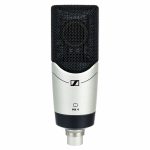
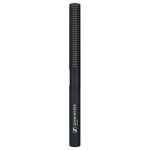
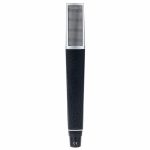
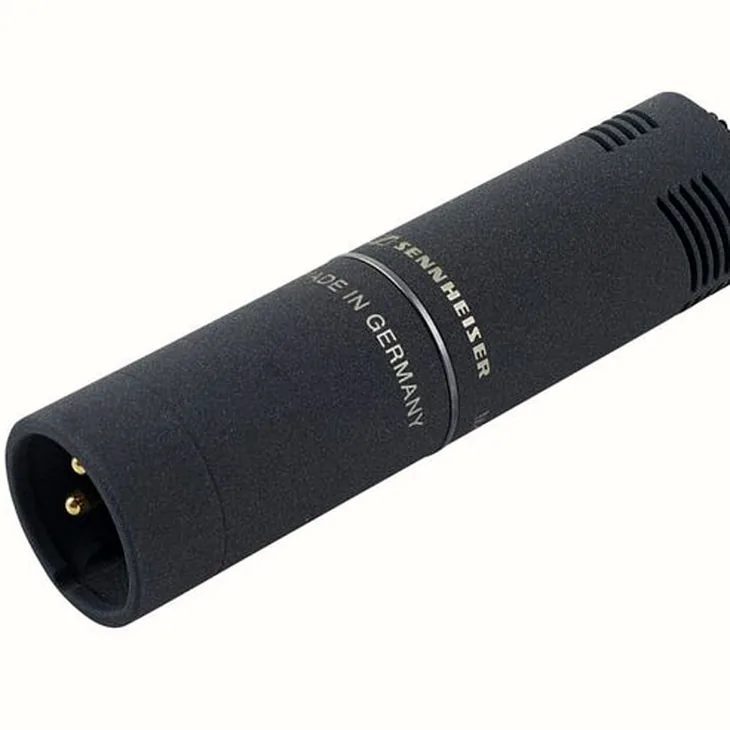
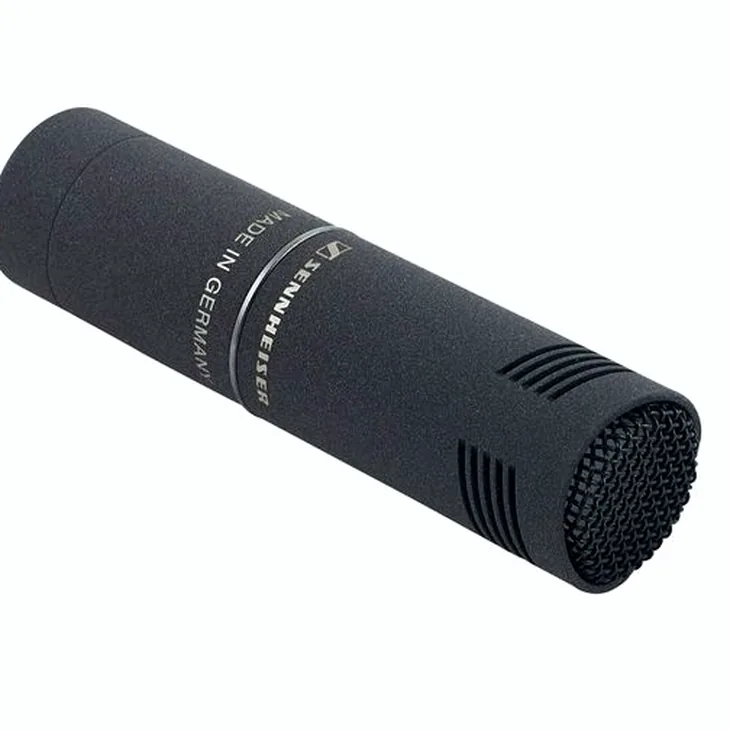
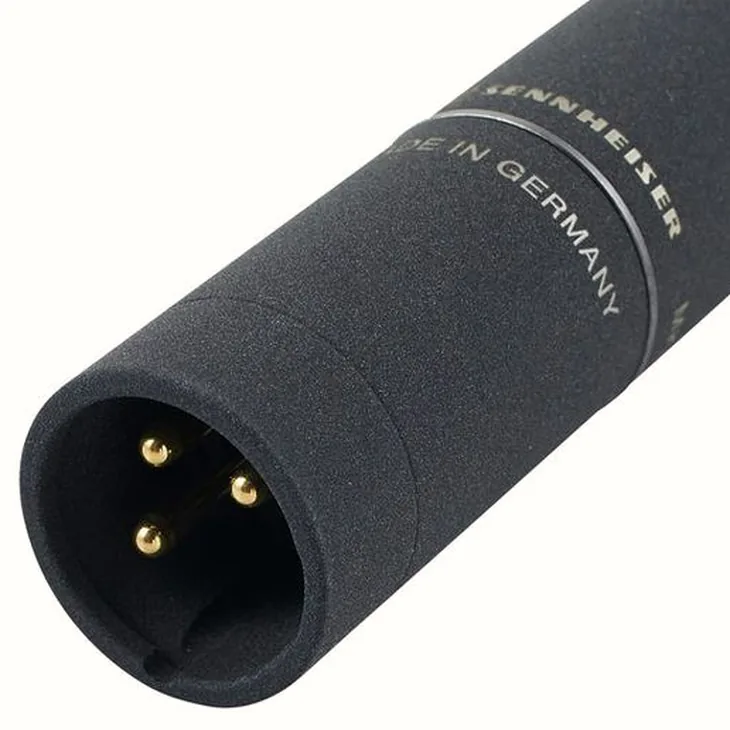
Sennheiser MKH 8050


Special features of Sennheiser model
- Supercardiod
- Modular design
- Frequency response: 30-50000 Hz
- 142 dB SPL
- 25 Ohm
- Extremely low noise
- Matte coating
- Includes MZQ 8000 microphone holder, MZW 8000 windshield and plastic case
Images



Additional Information
Customer Review Summary
The Sennheiser MKH 8050 is arguably one of the finest small diaphragm microphones available, particularly renowned for its supercardioid polar pattern.
Compact and discreet, it delivers a surprisingly rich sound for a microphone with an internal XLR connection. As a soloist microphone, it provides a close, present, and rounded audio quality while maintaining a natural feel.
The microphone effectively rejects off-axis noise without significant colouration, thanks to its remarkably frequency-neutral directional characteristics. Although it has a proximity effect common to supercardioids, the built-in bass boost can lead to high sensitivity to pops and handling noise, necessitating the optional MZF8000 filter module for many standard applications.
Despite being extremely low in noise for a small diaphragm model, one might expect even more acoustic differentiation compared to other high-end options. The distinct noise spectrum associated with its design contributes to this performance. Nevertheless, it competes well against a limited number of large diaphragm microphones when it comes to low self-noise.
The construction of the MKH 8050 is impeccable, though there is room for improvement in the quality of its accessories. It is highly recommended for classical soloists, speakers, and instruments, making anything sound prominent and grand.
Its climate resistance makes it suitable for film sound and outdoor ambience applications, provided it is used with a filter module and windscreen. Having used various high-quality microphones for live sound and recording, the MKH 8050 complements models like the MKH 50 and Schoeps MK 41 excellently.
In terms of frequency response, it offers unobtrusive openness in the highs and extends into the infrasonic range, which previously deterred some users from purchasing. However, the MZF 8000 II effectively addresses this concern. For many applications, the filter in a mixer suffices.
Designed for linearity at a distance, it can be adjusted with a tunable shelving filter to correct for proximity effect. It performs well across a wide range of angles, maintaining excellent sound quality even at 60 degrees off-axis.
Stereo configuration can benefit from using the Williams diagram for supercardioids, focusing the pickup pattern more towards the front, which is very effective.
The MKH 8050 is compatible with a variety of windshields, from subtle options like the DPA DUA0020 to more robust models from brands like Bubblebee and Rycote. While it may not match the legendary durability of the MKH 50, it is still reliable for field use.
In conclusion, I am extremely satisfied with the MKH 8050. It serves as a perfect complement to the MKH 50 and Schoeps MK 41. Choosing between these three exceptional microphones would be challenging, as they all deliver outstanding performance for their investment. Ideal for applications such as solo violin amplification, author readings, vocals in front of a PA, home recording, podcasts, and more, the MKH 8050 consistently exceeds expectations.
Read more…