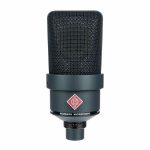
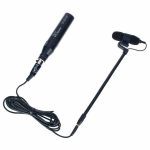
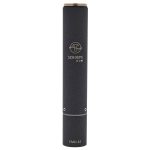
Neumann TLM 103 mt Mono Set


Main features of Neumann microphone
- Capsule design modelled after the legendary U 87 Ai
- Acoustic mode of operation: Pressure gradient transducer
- Directional characteristic: cardioid
- Transmission range: 20 – 20,000 Hz
- Max. SPL (sound pressure level) for k < 0.5% 3: 138 dB
- Equivalent noise level, A-weighted (rel. 94 dB SPL): 87 dB
- Requires +48 V phantom power
- Dimensions (diameter x length): 60 x 132 mm
- Weight: approx. 450 g
- Colour: Black
- Incl. EA1 elastic mount and aluminium case (suitable for 2 microphones and 2 shock mounts)
Images


Additional Information
Customer Review Summary
The Neumann TLM 103 mt Mono Set is an exceptional microphone that has proven to be a standout choice for home recording and studio use. Its ability to capture vocals in a clear, warm, and detailed manner is truly impressive. Whether recording singing, spoken word, or acoustic instruments, this microphone delivers an authentic sound that remains faithful to the source.
Users have praised the TLM 103 for its excellent build quality, which is typical of Neumann products, highlighting its durability and robust design. The microphone is straightforward to use, lacking complex features, yet it excels in delivering high-quality audio without frequency distortion. It’s particularly noted for its ability to handle various sound levels with clarity, making it suitable for both soft whispers and louder performances.
Many have found that the TLM 103 outperforms other microphones in its class, providing a “radio-friendly” sound straight out of the box, which is highly sought after in today’s music industry. The sound profile is described as bright and present, with a natural balance that enhances the vocal character without sounding harsh.
Overall, the Neumann TLM 103 mt Mono Set is highly recommended for anyone serious about recording, whether for music or podcasts. Its combination of quality, performance, and reliability makes it a worthwhile investment, ensuring that you get professional results every time.
Read more…