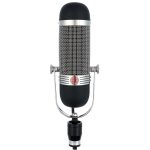
AEA R88 MK2


Details of model AEA R88 MK2
- Can also be used as a mid-side configuration
- 2 Ribbons placed 90º apart with figure-of-eight polar pattern
- Each 1.8 µm thin aluminium ribbon (4.7 x 59.7 mm)
- Frequency range: 20 to 20,000 Hz
- Limiting sound pressure level: 165 dB
- Sensitivity: 2.5 mV/Pa (-52 dBV)
- Output impedance: 270 Ohm
- Connection: XLR 5M plug
- Dimensions (H x D): 381 x 99 mm
- Weight: 2.6 kg
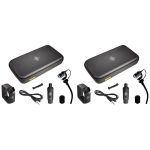
- Incl. 4.5 m cable XLR 5F male to 2x XLR3-M, swivel adapter, protective cover and high-quality carrying case
- Handmade in USA
Images


Additional Information
Customer Review Summary
I recently decided to invest in the AEA R88 MK2, and I truly wish I had done so sooner. This microphone perfectly completes my drum recording setup, which already includes a pair of 4038s as overheads. The R88 integrates seamlessly, adding a new dimension of spatiality to the sound. It allows for aggressive gating, compression, and distortion of other signals without making the drums sound unnatural. Overall, the R88 has a remarkably realistic and musical tone.
I have primarily used it as an overhead microphone, but I believe it has the potential to excel in various applications. I pair it with an AEA RPQ3, gently boosting the highs and lows, and it handles significant EQ adjustments exceptionally well. It’s worth every penny.
In summary, if I could only use one microphone, it would undoubtedly be the R88. I’m grateful I don’t have to make that choice. It’s truly a fantastic microphone!
Furthermore, I recently tested it on a grand piano and a jazz ensemble using the Blumlein technique, and the warmth and fullness of the sound were impressive. It’s essential to note that this passive version requires a preamp with high gain and low noise, such as my Millenia HV3D. For the jazz group, I positioned it three meters in front, and it captured an excellent sound without any mixing. I supplemented it with a contact mic for the piano and an RE20 for the bass, achieving an authentic and balanced mix with well-controlled highs. The tenor saxophone sounded particularly rich and warm, with flattering lower midtones.
Read more…