
What defines open-back and closed-back headphones?
In the world of home studio audio, one of the most debated choices is between open-back headphones and closed-back headphones. The difference lies in how their ear cups are constructed to manage airflow and sound. This design choice directly influences not only sound quality but also comfort and suitability for specific studio tasks like mixing and recording.
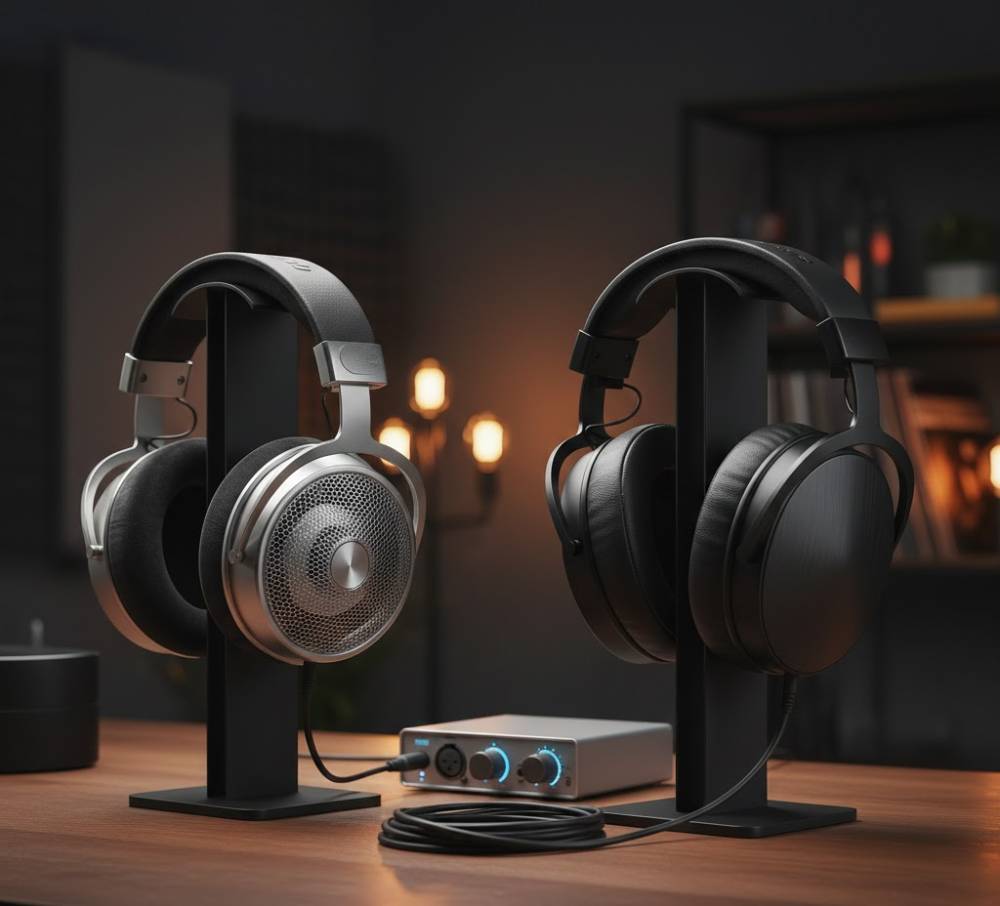
Open-back headphones are built with grilles or perforations that allow air and sound to move freely through the ear cups. In contrast, closed-back headphones use solid, sealed cups that hug the ears, stopping sound from escaping and blocking out external noise. This distinction shapes everything from critical listening experiences to long-session comfort.
Main uses of open-back and closed-back headphones
Choosing the right headphone type often depends on whether your priority is mixing with precision or tracking new parts during a recording session. Each style has clear strengths depending on your workflow and studio environment.
How do open-back headphones perform for mixing tasks?
For engineers and musicians alike, open-back headphones are a go-to for mixing duties. Their open design creates a more natural sound, closely resembling how speakers interact within a room. This makes them excellent for catching subtle EQ tweaks or stereo placement details that might be lost on other headphones.
Their ability to foster critical listening means even minor changes in reverb or panning become easy to identify. While some sound leakage occurs, that’s rarely an issue unless others are working nearby.
When are closed-back headphones better suited?
Recording sessions require strong noise isolation to block outside sounds and prevent playback tracks from bleeding into microphones. Closed-back headphones shine here due to their sealed build, ensuring clean takes and focused monitoring.
This isolation is especially valuable during vocal performances, guitar overdubs, or any time you need to avoid interference. Though the sound may feel more “in your head,” modern closed-backs offer clarity suitable for reference checks, making them a practical staple for studio use.
Comparing sound quality and daily studio use
For those serious about their craft, sound quality is paramount. Factors such as clarity, balance, and the accuracy with which headphones represent your mix depend heavily on their core design. Understanding when each type excels helps make informed decisions for your studio needs.
Why do open-back headphones offer a more natural sound?
The open structure lets sound waves interact naturally with the space around you, reducing internal pressure and resonance that can color playback. This results in a natural sound where depth, spatial cues, and stereo image come across much like they would on monitor speakers.
Musicians benefit from less ear fatigue during long sessions since there’s minimal acoustic trapping. However, this openness also means limited noise isolation, so they’re best used in quieter environments.
What makes closed-back headphones ideal for noisy spaces?
A sealed design offers robust protection against ambient noise—essential if your studio doubles as a living space or shares walls with neighbors. For vocalists and instrumentalists, the lack of sound leakage ensures that recordings stay crisp and uncontaminated by headphone bleed.
Although closed-back models may sacrifice a bit of soundstage compared to open-backs, their superior isolation provides reliable cue mixes and focus during high-pressure sessions, particularly late at night or in busy households.
Key advantages and drawbacks at a glance
Deciding between open-back headphones and closed-back headphones involves weighing their pros and cons based on your primary needs. Here’s a streamlined overview to help clarify your decision:
- 🎧 Open-back headphones: Natural sound, spacious feel, reduced ear fatigue
- 🔇 Closed-back headphones: Excellent noise isolation, zero sound leakage, versatile for recording
- 🔊 Open-back headphones: Minimal isolation, prone to leaking audio into live mics
- 😶🌫️ Closed-back headphones: Slightly colored sound but highly practical for focused studio use
| 🎵 Type | 👂 Sound quality | 🛑 Noise isolation | 💡 Ideal use case |
|---|---|---|---|
| Open-back | Natural, wide | Minimal | Mixing, critical listening |
| Closed-back | Controlled, direct | Excellent | Recording, monitoring |
Choosing the right option for your home studio needs
No single model covers every scenario, but aligning your choice with your main activities will boost efficiency and results. If your work mainly involves mixing in a quiet environment, open-back headphones maximize fidelity and long-term comfort.
If you regularly record vocals or instruments, closed-back headphones provide essential noise isolation and prevent unwanted sound leakage. Many hybrid studios in urban flats opt for both types, switching as needed for each session.
Are open-back headphones suitable for recording vocals?
Open-back headphones are rarely ideal for recording vocals. They tend to leak sound, which means the microphone can pick up unwanted audio during takes. Most engineers use closed-back headphones in the vocal booth for tighter control and cleaner stems.
- 🔇 Best for keeping guide tracks private
- 🎙️ Essential for sensitive condenser microphones
- ❌ Avoids headphone bleed ruining recordings
Which type gives a more honest representation of my mix?
Open-back headphones generally offer a more honest and natural sound, presenting stereo width and instrument separation that come close to nearfield monitors. They’re favored for mixing and final tweaks as small shifts in the arrangement stand out more clearly.
- 🎧 Superior for hearing fine EQ detail
- 🌟 Helps create well-balanced mixes with fewer surprises on speakers
Do closed-back headphones cause listening fatigue faster?
Listening fatigue can be more prominent with closed-back headphones, especially during extended mixing sessions. Their enclosed nature sometimes leads to slight pressure on the ears, but they’re still necessary when external noise is an issue. Taking regular breaks helps minimize discomfort over long days.
- ⏱️ Take short pauses every hour
- 😀 Use comfortable pads to ease pressure
Should I invest in both open-back and closed-back models for home studio use?
Having both types in your arsenal increases versatility. Open-back headphones deliver accuracy and a true-to-life sense of space for mixing, while closed-back headphones provide reliable monitoring free from distractions during demanding recording conditions.
- 💼 Adapt quickly to different tasks
- 🎶 Switch based on artist preferences or project needs
| 🔄 Task | ✅ Preferred Style |
|---|---|
| Mixing/mastering | Open-back headphones |
| Tracking/recording | Closed-back headphones |