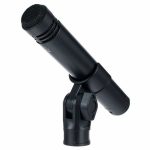
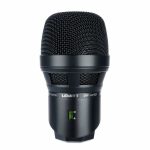
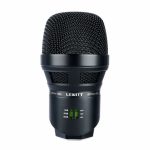
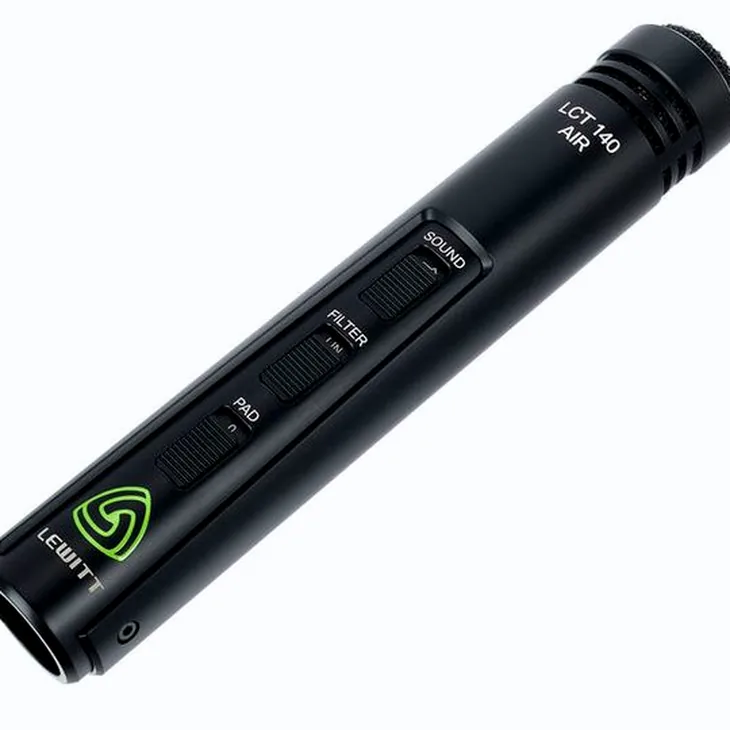
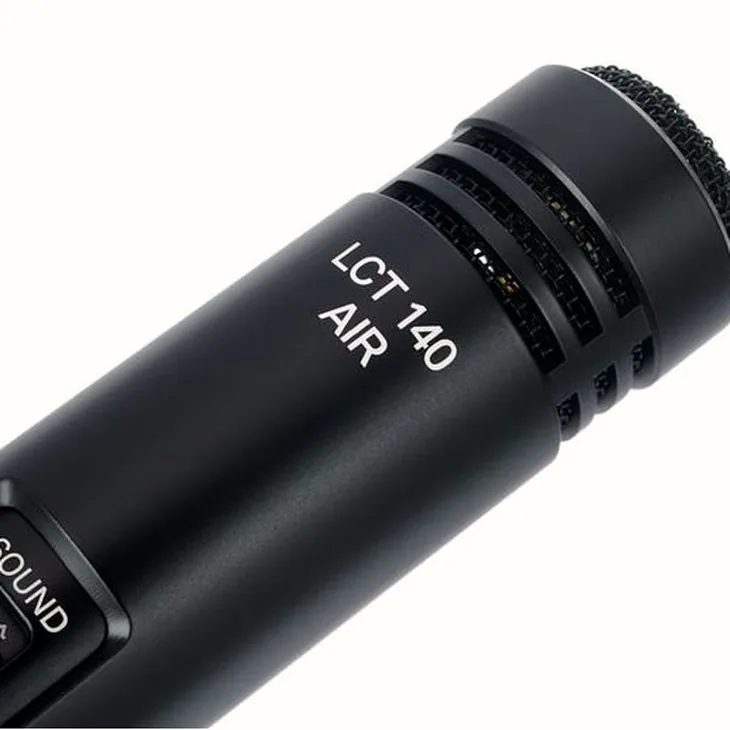
Lewitt LCT 140 Air Matched Pair


Special features of Lewitt model
- Matched pair
- Polar pattern: Cardioid
- Frequency response: 20 – 20000 Hz
- Sensitivity: 14.6 mV/Pa, -36.7 dBV/P
- Max. SPL: 135 dB
- Low cut: 80 Hz (12 dB/oct)
- Pad switch: -12dB
- Dynamic range: 115 dB
- Switchable sound characteristic: Air/Flat
- Dimensions: 24 x 140 mm
- Weight: 66 g
- Colour: Black
- Incl. 2 microphone clips, 2x windshield and carrying bag
Images



Additional Information
Customer Review Summary
Lewitt LCT 140 Air Matched Pair are an outstanding choice for anyone seeking affordable, pro-quality microphones. The sound quality is exceptional, providing a natural and transparent representation of acoustic instruments, which is particularly impressive given their price. They excel in various applications, from recording acoustic guitars and pianos to serving as overheads for drums.
The built-in features, including low-cut and high-boost filters, are practical and enhance versatility, allowing for tailored sound capture in different environments. While they may feel a bit lightweight and not as robust as some competitors, they hold up well in studio settings and are easy to handle. The “Air” switch adds a nice shimmer to recordings, although some users prefer to adjust this during mixing.
Many users have noted their effectiveness in capturing detailed sound in both intimate and larger settings, making them suitable for a variety of instruments and applications. They perform particularly well with high-frequency sounds and provide clear attack, although a few users have suggested that they can be a bit bright, which can be easily managed with EQ adjustments.
Despite minor concerns regarding the durability of the switches and the quality of materials, the overall performance and sound quality far outweigh these issues. In conclusion, the Lewitt LCT 140 Air Matched Pair stands out as a reliable, budget-friendly option that does not compromise on sound quality, making them a must-have for both amateur and professional recording setups.
Read more…