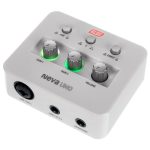
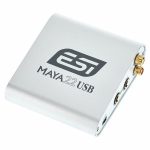
ESI U24 XL


ESI audio interface technical breakdown
- 24 bits
- 2 analogue inputs and outputs with 6.3 mm jack connection
- Output L can be used as a headphone output
- S / PDIF digital input / output coaxial & optical
- USB Bus-Powered
- Dimensions: 10 x 9 cm
- Compatible with Windows XP / Vista / 7/8 and Mac OS X
- Incl. Deckadance LE
Images


Additional Information
Customer Review Summary
Product Review of the ESI U24 XL
I recently discovered the ESI U24 XL audio interface, and I must say, I’m thoroughly impressed by its simplicity and sound quality. The installation is a breeze, particularly on Windows, where the drivers are recognised instantly. It is also compatible with Linux, which is a rare find and a significant plus for users of that operating system.
In terms of connectivity, the interface offers two TRS analog inputs and various digital outputs, including S/PDIF and Toslink. While some might prefer XLR connections, the quality of the sound is exceptional, providing a neutral and detailed audio experience. I’ve recorded guitar with effects like chorus and reverb, and the stereo output is rich and immersive.
One of the standout features of the ESI U24 XL is its low latency performance. With a digital connection, I’ve achieved latencies as low as 2 milliseconds, which is impressive for an interface at this price point. Even with analog connections, the latency remains around 5 milliseconds, allowing for seamless monitoring while playing.
However, it’s worth noting that the interface lacks the ability for direct monitoring in digital mode, which can be a drawback for some users. Additionally, it has been reported that the digital connections can be a bit finicky; some users have experienced issues with the Toslink connections not securing properly. Despite these minor flaws, the overall build quality is solid, housed in a robust metal casing.
For those looking for a compact and affordable solution for recording with excellent sound quality, the ESI U24 XL is an outstanding choice. It delivers everything one could need for home studio setups, particularly if you can forgo the digital monitoring feature. Highly recommended for both beginners and seasoned users alike!
Read more…