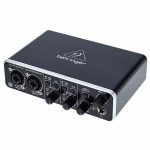
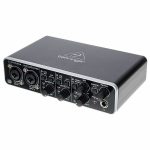
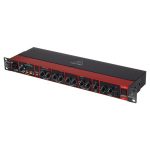
Behringer Studio L


Behringer audio interface features
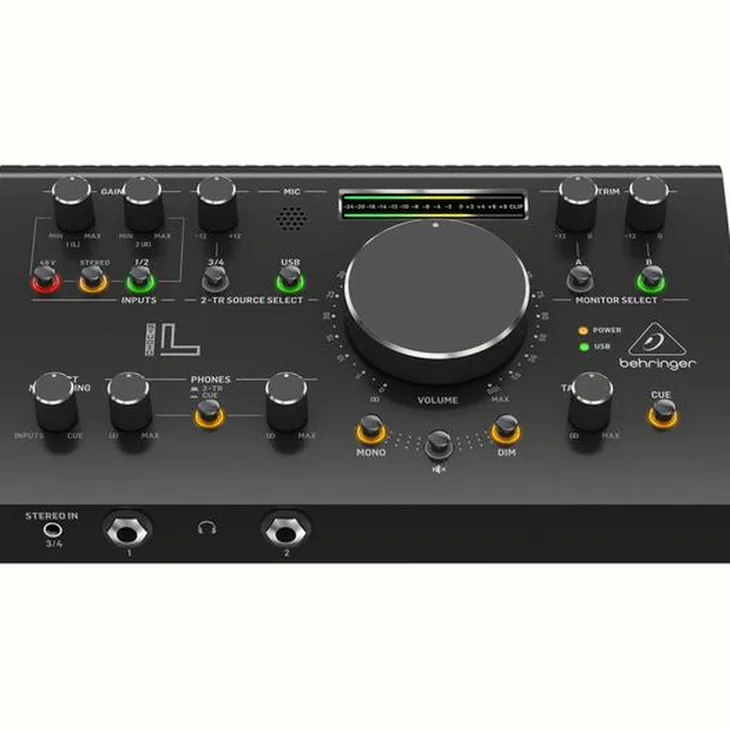
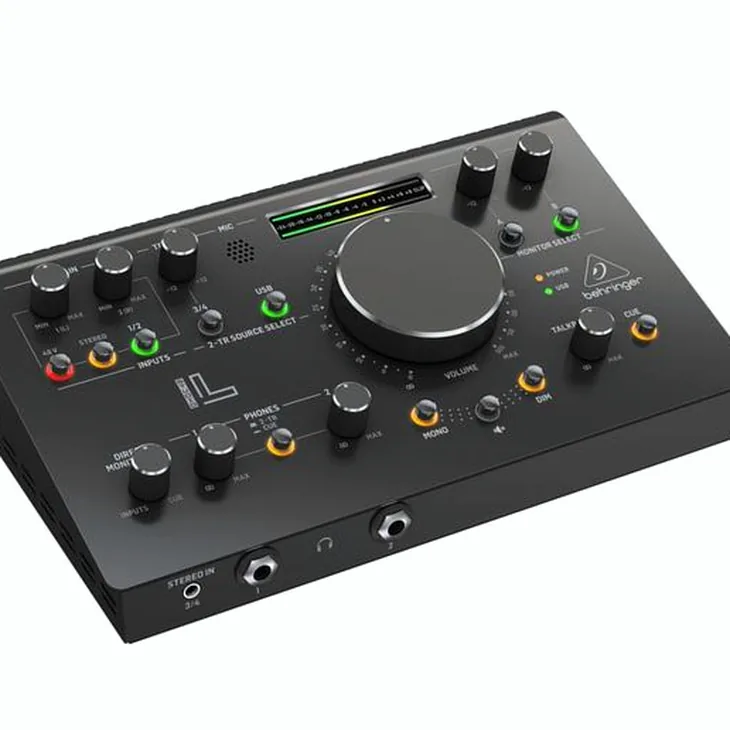
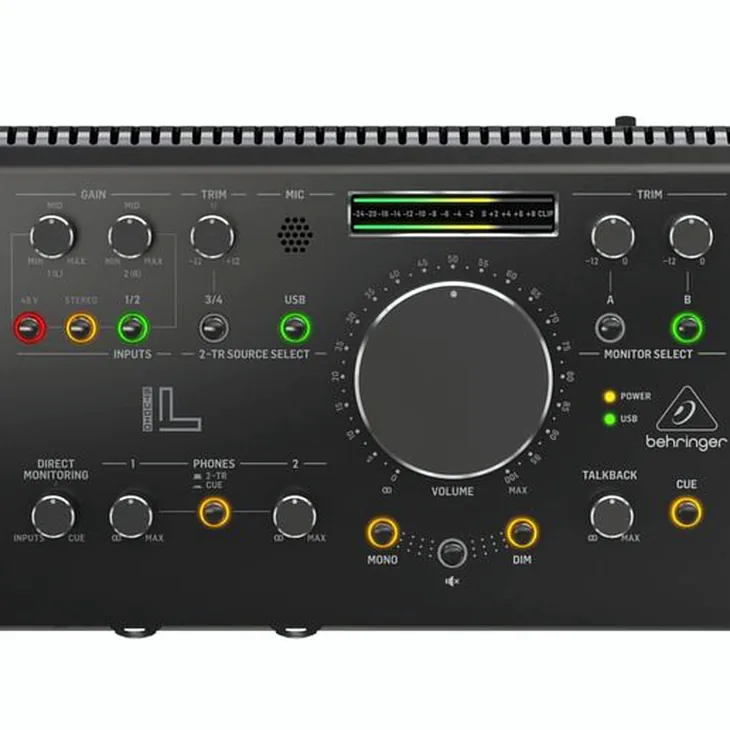
- Studio Monitor Controller with VCA stereo tracking
- Two Midas mic preamps with +48V phantom powering
- AD/DA converter: 24bit / 44.1 – 192 kHz
- Frequency range: 20 – 20,000 Hz
- SNR: <-90 dBu RMS
- THD+N: <0.01% @ 1kHz
- With master volume control, source selector and monitor switch
- Talkback function with built-in microphone and level control
- VCA control for level control and stereo tracking
- With mono, mute and dim function
- Zero-latency direct monitoring
- Dual LED display
- Two headphone amplifiers with separate volume controls and source selector switch
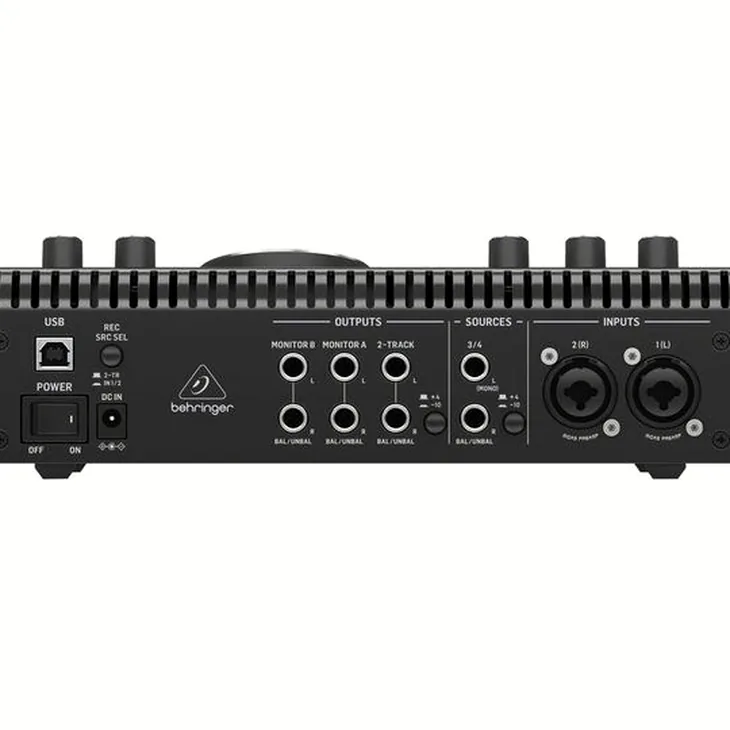
- Two independent monitor outputs for connecting an additional pair of monitors
- Aux input for connecting external sources
- 2 Mic/Line combo inputs: XLR/jack
- 2 Line inputs: 6.3 mm jack (balanced or unbalanced)
- 1 Stereo input: 3.5 mm jack
- 3 Stereo monitor outputs: 6.3 mm jack (balanced or unbalanced)
- 2 Headphone outputs: 6.3 mm jack
- USB Class-Compliant
- Power supply via mains adapter: 12V DC 2000 mA
- For Windows 10 and Mac OSX 10.14 or higher
- Dimensions (H x W x D): 80 x 252 x 163 mm
- Weight: 1.5 kg
- Includes power supply unit
Images
Additional Information
Customer Review Summary
The Behringer Studio L is a surprisingly high-quality monitoring controller that closely resembles the Mackie Big Knob Studio, yet offers superior materials. It significantly enhances sound quality compared to previous models like the Behringer Control2USB, although it lacks an S/PDIF input.
Weighing in at 1.5kg, it may not be the lightest USB interface on the market, but its solid metal construction contributes to a durable feel. The mechanical controls for microphone and monitor activation are discreet, and the large volume knob offers a satisfying tactile response. However, the three additional buttons (MONO, MUTE, DIM) only affect monitor outputs, which may limit functionality when using headphones.
The built-in talkback microphone performs well, exceeding expectations, although the dual LED metering could be improved for better clarity. Adjusting the computer volume is often necessary to avoid clipping, which can be inconvenient. The headphone outputs are powerful, but the headphone volume can become excessively loud, especially with certain models.
Initial setup is straightforward, and the ASIO driver installation is user-friendly. The interface provides ample connection options, including dual headphone outputs with independent volume controls, which is a plus for collaborative work. Despite some concerns about the longevity of the switches and the gain levels on the preamps, the sound quality remains commendable, with minimal noise and clear performance.
Overall, the Behringer Studio L is highly recommended for those seeking a reliable and affordable monitoring solution. Its robust build, ease of use, and functional design make it a valuable addition to any studio setup, despite a few minor areas for improvement.
Read more…