Field Test · Studio Gear Review
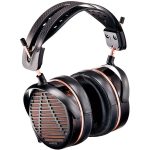
AKG K-812
Test & review: AKG

AKG

- Reference Headphones
- Accessories & matching items
- 117Customer ratings
- Compare options
- Smart Navigator
Spec Sheet
- Open-back
- Circumaural
- Dynamic
- Impedance: 36 ohms
- SPL: 110 dB
- Frequency range: 5-54000 Hz
- Max. input level: 300 mW
- Detachable cable, single cable guide
- Cable length: 3 m
- LEMO connector and gold-plated 3.5 mm jack
- Weight with cable: 455 g
- Weight without cable: 402 g
- Incl. stand made of real wood
Studio Log
| Available since | December 2013 |
|---|---|
| Item number | 328776 |
| Sales Unit | 1 piece(s) |
| Design | Over-Ear |
| System | Open |
| Impedance | 36 Ohms |
| Frequency range | 5 Hz – 54000 Hz |
| Adaptor | Yes |
| Replaceable Cable | Yes |
| Colour | Black |
| Max. SPL | 110 dB |
| Sensitivity | 110 dB |
| Type Of Connector | Mini Jack |
| Adapter | Yes |
| Weight | 402 g |
| Replacable Cable | Yes |
| Marrone/Argento | Black |
Demo Footage
Field Photography






QC Pass — Field Test
Customer Review Summary
Introduction to the AKG K-812
Since its release in December 2013, the AKG K-812 has positioned itself as a flagship open-back over-ear headphone aimed at professional and audiophile markets. Priced at £990, it represents AKG’s commitment to high-fidelity sound reproduction with a focus on neutrality and precision. With its circumaural design, low impedance of 36 Ohms, and a broad frequency response ranging from 5 Hz to 54,000 Hz, the K-812 promises a detailed and expansive listening experience suitable for classical music enthusiasts, sound engineers, and critical listeners.
Design and Build Quality
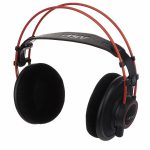
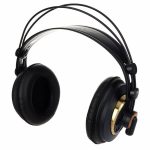
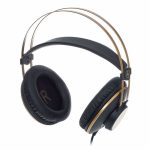
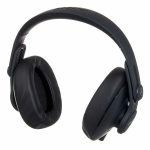
The K-812 embodies a robust construction that harks back to the Vienna-based engineering heritage of AKG. Weighing 402 g without the cable (455 g with), it strikes a balance between substantial presence and comfort. The circumaural earcups are generously sized, providing ample room for the ears to rest without contact, which aids ventilation and reduces fatigue over extended sessions.
- Materials: Premium components, including a real wood stand supplied with the headphones, reinforce the high-end impression.
- Cable: The detachable cable uses a LEMO connector on the headphone side and a gold-plated 3.5 mm mini-jack at the amplifier end. While flexible, some have noted that the cable appears fragile and may require careful handling to avoid damage.
- Adaptability: The headphones include an adaptor and accommodate a 3 m cable length suitable for studio use.
One ergonomic note is the relatively light clamping force, which enhances comfort but may cause the headphones to slip with abrupt head movements. The cable’s single-sided guide reduces tangling but could be more robust to meet the demands of professional use.
Sound Performance
Neutrality and Frequency Response
The hallmark of the K-812 is its exceptional neutrality. Unlike many headphones that colour the sound by emphasising bass or treble, these deliver an impressively flat and extended frequency response, revealing the source material in unvarnished detail. The frequency range of 5 Hz to 54,000 Hz covers far beyond human hearing, ensuring that subtle harmonics and overtones are preserved.
Listeners have praised the K-812 for accurate representation across the spectrum, with neither prominence nor suppression in any range. This is especially important for classical music where faithful reproduction of complex instruments is paramount. However, some have observed slight peaks around 2 kHz, 6 kHz, and 8, 12 kHz, which can cause a degree of listening fatigue during extended mixing sessions.
Soundstage and Imaging
One of the most striking qualities is the expansive and well-defined soundstage. The open-back design contributes to an enveloping spatial experience where instruments seem to originate from a cloud surrounding the head rather than being confined within it. This alleviates the typical “in-head localisation” issue common to many headphones.
Precise imaging allows acute differentiation between closely positioned instruments, such as distinguishing between sampled keyboard strings and real violins. This capacity makes the K-812 invaluable for detailed audio analysis and mastering.
Bass, Midrange, and Treble Characteristics
- Bass: The bass extends deeply and cleanly without overshadowing other frequencies. It provides powerful foundation notes without boom or distortion, an uncommon quality in open-back designs.
- Midrange: Natural and neutral, facilitating accurate vocal and instrumental timbres. The midrange reproduction avoids artificial warmth or coloration.
- Treble: Clear and precise with authentic presentation of cymbals and brass. The slight emphasis noted in the upper midrange and highs lends brilliance but can be perceived as sharp on poorly recorded or highly compressed tracks.
Usage Scenarios
The AKG K-812 is particularly well suited for connoisseurs of classical music, studio engineers, and audiophiles demanding a transparent and truthful listening tool. Its capacity to expose flaws in recordings can be a double-edged sword; unrefined sources may sound harsh or unpleasant through these headphones.
This headphone is not optimised for casual listening of heavily produced pop or electronic music, where some may prefer a warmer or more coloured sound signature. However, the K-812 excels with acoustic, jazz, blues, and high-resolution classical recordings.
Driving the K-812 correctly requires an external dedicated headphone amplifier capable of providing sufficient power and impedance matching. Integrated headphone outputs on many consumer devices may not deliver adequate volume or fidelity, especially in the lower frequencies.
Comfort and Ergonomics
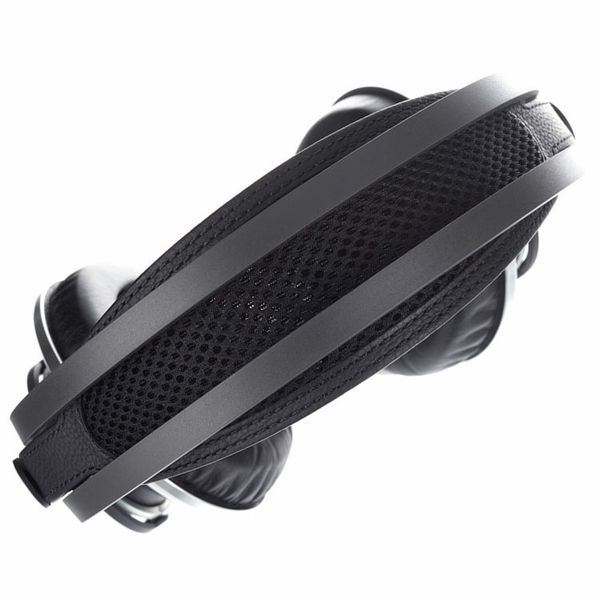
Despite its substantial weight, the K-812 remains comfortable during prolonged listening sessions, thanks to its well-padded, large earcups and a softly cushioned headband. The open design allows ear cooling, which avoids the heat buildup seen in closed-back models. Users wearing glasses have reported a comfortable fit without undue pressure.
The main ergonomic drawback is the limited clamping force, risking the headphone slipping when bending forward or during rapid head movements. This factor may reduce suitability for active or mobile use, making it primarily a stationary listening device.
Points of Concern
- Some users report the supplied cable is somewhat delicate for the price category and may be prone to internal wire damage after extended use.
- The wooden stand included, while aesthetically pleasing, does not provide optimal headphone storage as it can trap moisture against the ear pads.
- Although the K-812 approaches neutrality, the slight high-frequency elevation might be fatiguing for mixing engineers relying exclusively on these headphones without applying equalisation.
Conclusion
The AKG K-812 represents a milestone in open-back headphone design, championing accuracy and comfort in a package aimed at demanding listeners and professionals alike. Its ability to unveil intricate details and present an expansive, natural soundstage makes it ideal for classical music aficionados and studio reference applications. While the price point and certain physical and technical caveats may limit its appeal to a niche audience, its defining strength lies in honest, transparent sound reproduction. When paired with the right amplification and sources, the K-812 remains a definitive choice for those seeking veracity over artificial enhancement.
In comparison with peer models such as the Beyerdynamic DT 1770 PRO or Sennheiser HD 800, the AKG offers a distinctively balanced and “in-your-face” presentation, favouring clarity and neutrality without sacrificing sonic impact. Its ergonomic features and build quality further underline its premium status, despite minor reservations about cable durability and a slight high-frequency lift.