Field Test · Studio Gear Review
the t.bone HP 66
The t.bone’s affordable on-ear headphones for casual audio and practice use
 the t.bone

- Stereo Headphones
- This is what customers who viewed this product bought
- Accessories & matching items
- 2277Customer ratings
- Compare options
- Smart Navigator
Spec Sheet
- Dynamic
- On-ear
- Impedance: 32 Ohm
- Frequency range: 20 Hz – 20,000 Hz
- Max. sound pressure level: 106 dB
- 2 m cable
- Weight: 78 g
- Includes Adapter 3.5 mm to 6.3 mm
Studio Log
| Available since | July 2004 |
|---|---|
| Item number | 170089 |
| Sales Unit | 1 piece(s) |
| Design | On-Ear |
| System | CLosed Back |
| Impedance | 32 Ohms |
| Frequency range | 20 Hz – 20000 Hz |
| Adapter | Yes |
| Replacable Cable | No |
| Marrone/Argento | Black |
| Type Of Connector | Jack, mini-jack |
Demo Footage
Field Photography


QC Pass — Field Test
Customer Review Summary
[META]Review of the the t.bone HP 66, budget-friendly closed-back on-ear headphones ideal for keyboard practice and casual listening.Overview of the the t.bone HP 66
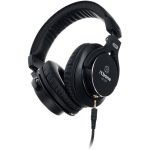
Released in July 2004, the the t.bone HP 66 presents itself as an affordable option within the on-ear headphone category. Priced around £6, this model is designed to serve basic audio needs, chiefly as a closed-back headphone with 32 Ohms impedance and a frequency response spanning from 20 Hz to 20,000 Hz. The compact, lightweight design (78 g) and 2-metre cable suit applications like keyboard practice or casual listening. Notably, the headphones come with a 3.5 mm to 6.3 mm adapter, facilitating compatibility with instruments or audio equipment featuring larger connectors.
Build, Comfort and Design
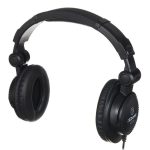
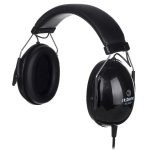
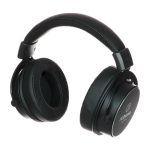
The HP 66 is an on-ear headphone, meaning the ear cups rest directly on the ears rather than enclosing them. This design decision contributes to an overall light weight and portability, further enhanced by the fold-flat capability that allows for easy storage. The build quality reflects its price point; materials feel basic and the fit may vary significantly depending on the user’s head size. Some users report that the plastic headband lacks durability and the foam earpads degrade quickly under regular use, with replacements costing a substantial portion of the headphone’s retail price.
Comfort is subjective but generally considered average. These headphones exert moderate pressure on the ears, which can become noticeable over longer listening or practice sessions. For users with larger heads, fit and stability tend to be better, though individuals with smaller head sizes may experience slipping during movement. The closed-back claim is somewhat misleading, as ambient noise leakage is not well controlled, making the HP 66 more akin to an open-back experience in environments with multiple sound sources.
Sound Quality
Given its extremely low price, the the t.bone HP 66 delivers surprisingly clear and balanced audio. For instrument practice, particularly keyboards and digital pianos, the sound reproduction is clean with sufficient clarity for mid and high frequencies. Bass presence is moderate, lacking the extension and depth found in higher priced models, but remains adequate for typical practice or casual multimedia playback.
Users report a maximum sound pressure level of 106 dB, which allows for a robust volume range. The audio can distort when pushed to maximum levels, resulting in an unpleasant noise, so moderate volume settings are advisable. Stereo imaging is basic, suitable for general listening but not detailed enough for mixing or critical audio work.
Practical Usage and Suitability
- Keyboard and Instrument Use: These headphones are well matched to beginners or hobbyists practising keyboards or other electronic instruments where a light weight and long cable length (2m) are beneficial.
- Casual Listening: Suitable for general media consumption, although audio enthusiasts seeking rich, immersive sound or noise isolation may find the HP 66 lacking.
- Portability: Folding construction and included adapter improve versatility and storage convenience.
- Durability: Although the build quality is basic, careful use can prolong lifespan. The fragile feel and limited replaceable parts suggest these headphones are better suited for light, non-professional use.
Known Limitations
The non-replaceable cable restricts maintenance options, and the earpads degrade relatively quickly with frequent use. The lack of significant noise isolation reduces effectiveness in loud surroundings. Moreover, their retro 1990s styling and relatively basic features will not appeal to users needing modern ergonomic comfort or advanced audio technologies.
Conclusion
The the t.bone HP 66 stands out as a cost-effective choice for those requiring a simple, lightweight headphone predominantly for keyboard practice and non-demanding audio applications. It does not compete with mid-range or premium headphone options on comfort, build quality or sound sophistication, but its balanced sound and extended cable length offer practical value within its class.
Prospective buyers should temper expectations, recognising that some compromises in durability and fit are inherent at this price point. If the primary goal is a disposable, no-frills headphone for casual use or bundled with an instrument, the HP 66 does the job. Alternative models under £20 may deliver more comfort or better sound fidelity but at an increased cost.