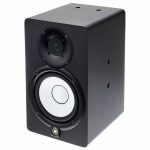
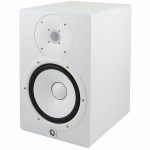
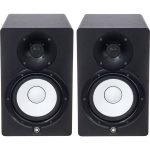
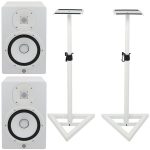
Yamaha HS 8S


Technical characteristics of Yamaha HS 8S
- 150 Watt
- Frequency response: 22 Hz – 150 Hz
- Low-cut switch
- Low-cut control (80 – 120 Hz)
- High-cut control (80 – 120 Hz)
- Phase switch
- Inputs: XLR
- Outputs: XLR L / R and XLR for external sub
- Dimensions: 300 x 350 x 389 mm
- Weight: 12.5 kg
Images


Additional Information
Customer Review Summary
Yamaha HS 8S Subwoofer Review
As a user of the Yamaha HS 8S subwoofer, I find it to be an exceptional addition to any monitoring system, especially when paired with Yamaha HS series speakers. This subwoofer delivers remarkable power and precision in the low frequencies, which is essential for music genres that require deep bass, such as electronic and hip-hop. With a frequency response that extends down to 22 Hz, it provides a clarity that many standard monitors struggle to achieve, making it a vital tool for mixing and mastering.
Pros:
- Clear and deep bass response, enhancing the overall sound quality significantly.
- Easy integration with existing setups due to versatile connectivity options including XLR and TRS inputs.
- Adjustable low-pass filter and phase switch, allowing for precise tuning to fit your studio environment.
- Solid build quality typical of Yamaha, ensuring durability and reliability.
- Improves the accuracy of mixes by allowing for better balance in low-end frequencies.
Cons:
- Potential for air noise at higher volumes due to the front-firing bass reflex design, which can be distracting in smaller rooms.
- Requires careful calibration to prevent overpowering the monitors, as improper settings can lead to an unbalanced mix.
- Some users may find it heavy and bulky for smaller setups.
- A lack of a bypass switch for quick comparisons between setups can be inconvenient.
In conclusion, the Yamaha HS 8S is a fantastic investment for anyone serious about their audio production. It provides the depth and clarity needed for professional-quality sound, making it indispensable for both home studios and professional environments. With proper acoustic treatment and careful setup, it can transform your mixing experience, delivering a full, rich sound that is both enjoyable and precise.
Read more…